The Cabinet Features Worth Living With: A Gallatin Valley Guide to Custom Kitchen Details
In Gallatin Valley and Big Sky homes, those choices carry extra weight. Cabinetry is the largest investment in a kitchen and the hardest thing to change later. Appliances get replaced. A backsplash can be swapped in an afternoon. Reworking cabinets means starting over. So the features we spend the most time talking through with clients aren't the ones that are popular this year. They're the ones that still feel right ten years in.
Here are the cabinet features that we've seen matter.
Soft-close, where it counts
Soft-close hardware has become close to standard, so the interesting part isn't whether a kitchen has it. It's that the quality of the mechanism varies a lot, and the difference only shows up after it's been used.
We see it in the high-traffic spots. The utensil drawer that opens and shuts a dozen times during dinner prep. The trash pull-out. The cabinet a kid swings open on the way to grab a snack. In those places, a quality damper keeps that quiet, controlled glide for years, where a cheaper one tends to loosen and start to rattle within a couple of seasons. In a guest-room vanity that gets opened twice a month, the basic version holds up fine and nobody ever notices the difference.
When we map out a kitchen, the better hardware goes where the hands go. It's a small thing that adds up to a kitchen that still feels luxury long after move-in.
Storage you don't see, doing the work you do
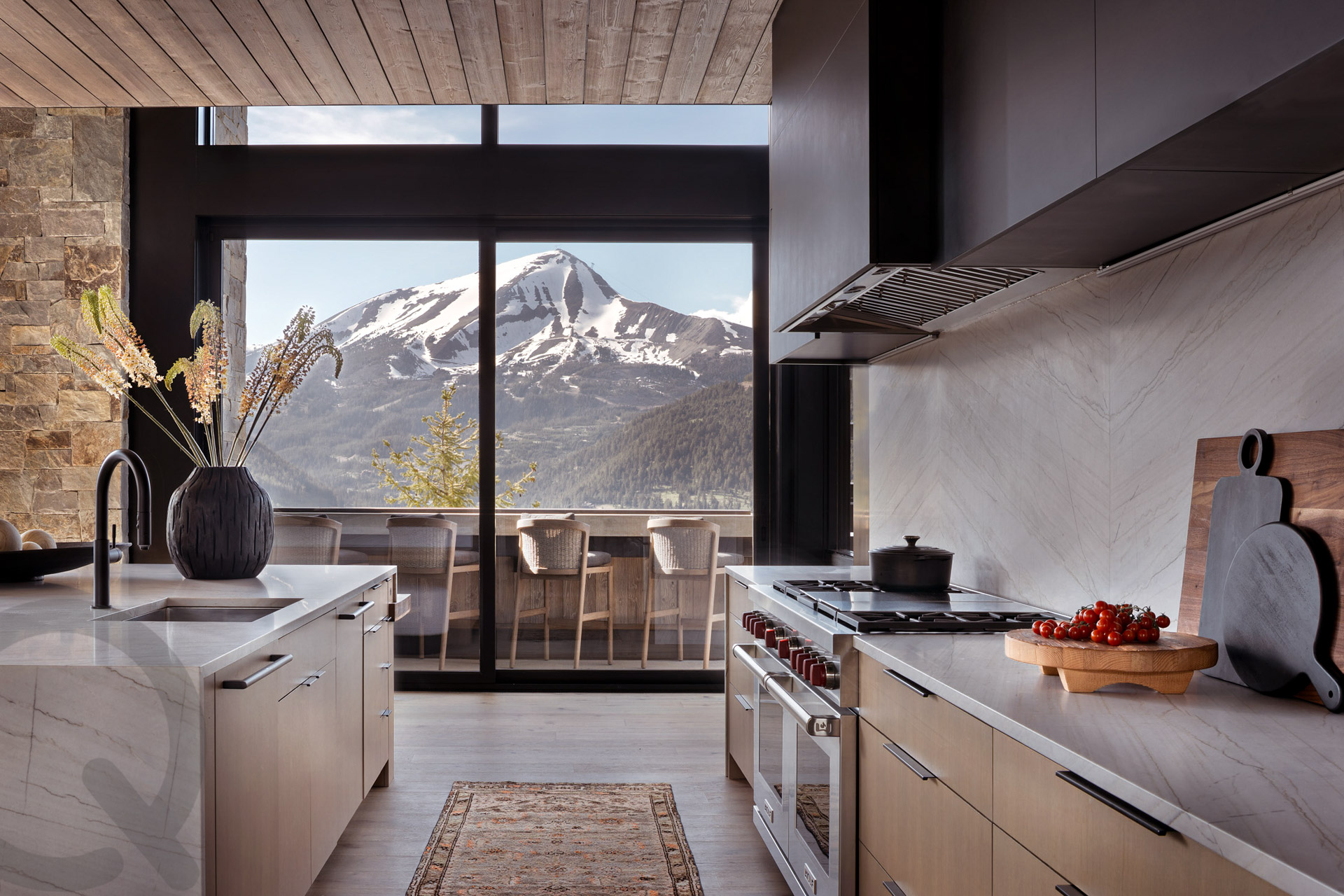
Open-concept layouts are common in the mountain homes we work on, where the kitchen looks straight into the living space and out toward the Bridgers or the Spanish Peaks. The view is the whole point of the room. Which means everything that would clutter that picturesque view needs a place to go.
This is what concealed storage is really for, and it tends to work best as a plan rather than a collection of gadgets. An appliance garage keeps the espresso machine and the toaster off the counter but plugged in and ready to go. Deep drawers with fitted dividers turn a low cabinet you'd otherwise crouch and dig through into something that brings its contents up to meet you. A hidden waste pull-out keeps the one thing nobody wants to look at out of view entirely.
What we've found is that these pieces work beautifully when they're decided together, mapped to what a household actually owns and how they cook. When done one at a time because each looked clever in a catalog, they tend to add up to less than the sum of their parts. The plan is what makes the storage feel like it was made for the life in the room.
Drawer interiors: the part of the kitchen only you touch
Custom inserts get described as a luxury detail, and they do photograph well. But the reason we love them is more fundamental than that. A drawer where knives, spices, and utensils each have a fitted spot is a drawer where nothing shifts when you pull it open, nothing rattles, and the daily hunt for that thing you know is in there, just stops happening.
It's the least visible upgrade in a kitchen and one of the most felt. No one touring the house ever sees inside the drawers. The people who live there open them several times a day for as long as they own the home. There's a quiet satisfaction there that's hard to appreciate until you've lived with it.
Lighting inside and under the cabinets
Integrated cabinet lighting does two different jobs. Under-cabinet lighting provides task illumination directly on the countertop, ensuring work surfaces remain bright and shadow-free. In-cabinet and shelf lighting are more atmospheric, adding depth and warmth while showcasing the cabinetry and displayed objects. In the evening, this softer glow helps the room move from a functional workspace feeling to a more relaxed and inviting environment.
In Montana, this matters more than it might somewhere else that has longer winter days. From late afternoon on through the dark months, a kitchen lit only from overhead can feel flat. Layered cabinet lighting carries the room through that stretch of the year, and it's far simpler to build in early, while the wiring is open, than to add later. It's one of those choices we like to raise at the start, because it is a detail that gets felt later.
Handle-free fronts, and the precision behind them
Handle-free cabinetry, whether push-to-open or a recessed pull, gives a kitchen an uninterrupted run of cabinet face. The look is clean and architectural, and it lets the material and the proportions carry the room instead of the hardware.
There's a craft reason this style is worth understanding before choosing it. With no handles to catch the eye, every gap between doors is on display, and the slightest misalignment shows. The clean look depends entirely on tight tolerances and careful installation. It's one of the clearest examples of how much the maker matters, more than the catalog ever could. Built with care, handle-free fronts feel calm and intentional. Built loosely, they announce every flaw the style was meant to hide. Knowing that going in is part of choosing well.
Color and texture that hold up over time
The all-white kitchen has stopped being the automatic answer, and the warmer, deeper tones replacing it tend to suit a Montana home naturally. Soft clays, muted greens, and real wood grain read as settled and warm, and they sit easily alongside the stone and timber already doing so much of the work in these spaces.
Texture is part of the same story. Reeded fronts, wire-brushed wood, and matte finishes catch the light differently as the day moves, giving a surface something to do beyond its color. Two-tone cabinetry, lighter uppers over a darker base or island, builds in depth without committing the whole room to one heavy tone.
Cabinetry is a long-term decision, so the best color choices are often the ones rooted in the room itself. A tone that complements the light, materials, and function of the space is far more likely to stand the test of time than one chosen simply because it's on trend.

Cabinetry to the ceiling
Running cabinetry the full height of the wall serves two purposes. It captures the often-unused space above standard upper cabinets, providing valuable additional storage, while also creating a more integrated, architectural appearance. Rather than feeling like individual cabinets attached to a wall, the cabinetry feels like a built-in element of the home.
In rooms with the tall ceilings common in mountain homes, it also quietly solves a proportion problem. Standard-height uppers can leave an awkward band of bare wall that makes a room feel unfinished. Carrying the cabinetry up closes that gap and lets the height of the space work for the room instead of against it. Paired with panel-ready appliances, the kitchen starts to read as one composition rather than a collection of parts.

The thread running through all of it
None of these features is really about impressing a visitor. Each one is a small, repeated part of how a kitchen serves the people who live in it, every day, for years. That's the way we tend to look at a project: less about what turns heads in a showroom, more about what still feels right on an ordinary morning long after the work is done.
That's the part of this we love, helping sort which details earn their place in a particular home, a particular quality of light, and a particular way of living, then building them to last. If you're planning a kitchen in the Gallatin Valley, Bozeman, or Big Sky, we'd be glad to think it through with you.
Frequently asked questions
Are soft-close cabinets worth the cost? In high-use drawers and doors, yes. A quality soft-close mechanism stays smooth and quiet for years and reduces the wear that comes from doors and drawers slamming. The value is highest in the spots you open most, like utensil drawers, trash pull-outs, and everyday cabinets. In low-traffic areas the basic version is usually fine, so the smart approach is to spend where the use justifies it rather than upgrading every drawer in the house.
What custom cabinet features add the most value to a luxury home? The features that hold value are the ones tied to daily function and quality of build: concealed storage that keeps open-plan sightlines clean, custom drawer interiors, layered cabinet lighting, and cabinetry built to tight tolerances. Buyers of high-end homes notice thoughtful storage and precise craftsmanship more than any single trend, and well-built cabinetry lasts decades, which protects the investment over time.
What's the difference between soft-close and self-close cabinets? Self-close hardware pulls a door or drawer the rest of the way shut once it's pushed near the closed position. Soft-close adds a damper that slows that final motion so it closes quietly and gently instead of snapping. Soft-close is the more refined of the two and the one worth specifying in a high-use kitchen.
Is handle-free cabinetry a good choice for a busy kitchen? It can be, with two things in mind. The clean look depends on precise construction and installation, since there's no hardware to disguise any misalignment, so the cabinet maker matters a great deal. And push-to-open mechanisms should be matched to how the kitchen is used, since some hands and some high-traffic spots are better suited to a recessed pull than a push latch. Done well, handle-free fronts give a calm, architectural look that suits open mountain-home layouts.
Why is cabinet lighting worth planning into a Montana kitchen? Winter daylight in the Gallatin Valley and Big Sky is short, and a kitchen lit only by overhead fixtures can feel flat through the darker months. Under-cabinet task lighting puts usable light on the counter, and in-cabinet lighting softens the room in the evening. Planning it into the cabinetry early keeps the wiring simple and avoids a more involved retrofit later.
Should I choose cabinet colors based on current trends? It's better to choose for your light, your materials, and how long you plan to live in the home. Cabinetry is the hardest part of a kitchen to change, so a color picked because it suits the room tends to look right far longer than one picked because it's having a moment. Warmer tones and natural wood grain pair well with the stone and timber common in Montana homes and tend to age gracefully.