Kitchen Design in Bozeman: Mixing Metals for Mountain Homes
The question comes up in nearly every custom kitchen project: do the cabinet pulls need to match the faucet? Should the range hood coordinate with the pendant lights? And what about the appliances? Do they dictate everything else?
The short answer: not anymore. Mixing metal finishes has moved from design risk to design standard, particularly in luxury kitchens where layered, curated details create more visual interest than perfectly matched sets ever could.
At Quest, metal coordination decisions happen early in the design process, not as an afterthought, but as part of how cabinetry, lighting, and architectural details work together from the start. For projects throughout Gallatin Valley and Big Sky, this means understanding both the design trend and how it translates within Montana's distinct aesthetic.
Starting with What's Already There
Most kitchen projects don't begin with a blank slate. There's usually an anchor element: something the homeowner loves and wants to build around. It might be a professional range they've been planning for years, a statement light fixture, or architectural features already in place like exposed steel beams or a stone range hood with metal strapping.
These anchor elements influence metal decisions before a single cabinet is ordered. A brushed stainless range becomes the cool-toned foundation. An unlacquered brass chandelier the homeowner inherited sets a warm metal baseline. Even existing door hardware on a home's entry can inform what feels cohesive in the adjacent kitchen space.
Quest's design process accounts for these anchors, using cabinetry hardware and finish selections to either complement or provide intentional contrast. The goal is making deliberate choices that respond to what's already present rather than creating a collection of disconnected finishes.
The 60-30-10 Balance Principle
Designers often use a 60-30-10 rule when mixing metals. It's a proportion guideline that creates visual balance without feeling overly matched or chaotic.
The breakdown:
- 60% dominant finish: The primary metal that appears most frequently, typically on cabinet hardware, major appliances, or the largest metal surfaces
- 30% secondary finish: A complementary metal that provides contrast, often seen in lighting fixtures, faucets, or architectural details
- 10% accent finish: Small doses of a third metal in accessories, decorative elements, or specialty hardware
This isn't a rigid formula requiring precise measurement. Instead, it's a useful framework for thinking about hierarchy and repetition. The dominant metal establishes the baseline. The secondary metal creates visual interest through contrast. The accent metal, if used at all, adds subtle complexity without overwhelming the space.
In practice, this might look like matte black cabinet hardware throughout (dominant), unlacquered brass lighting and faucet (secondary), and a few polished nickel decorative pulls on glass-front cabinets (accent). Or brushed nickel as the workhorse finish, aged brass for warmth in lighting, and copper bar hardware for a third-layer detail.
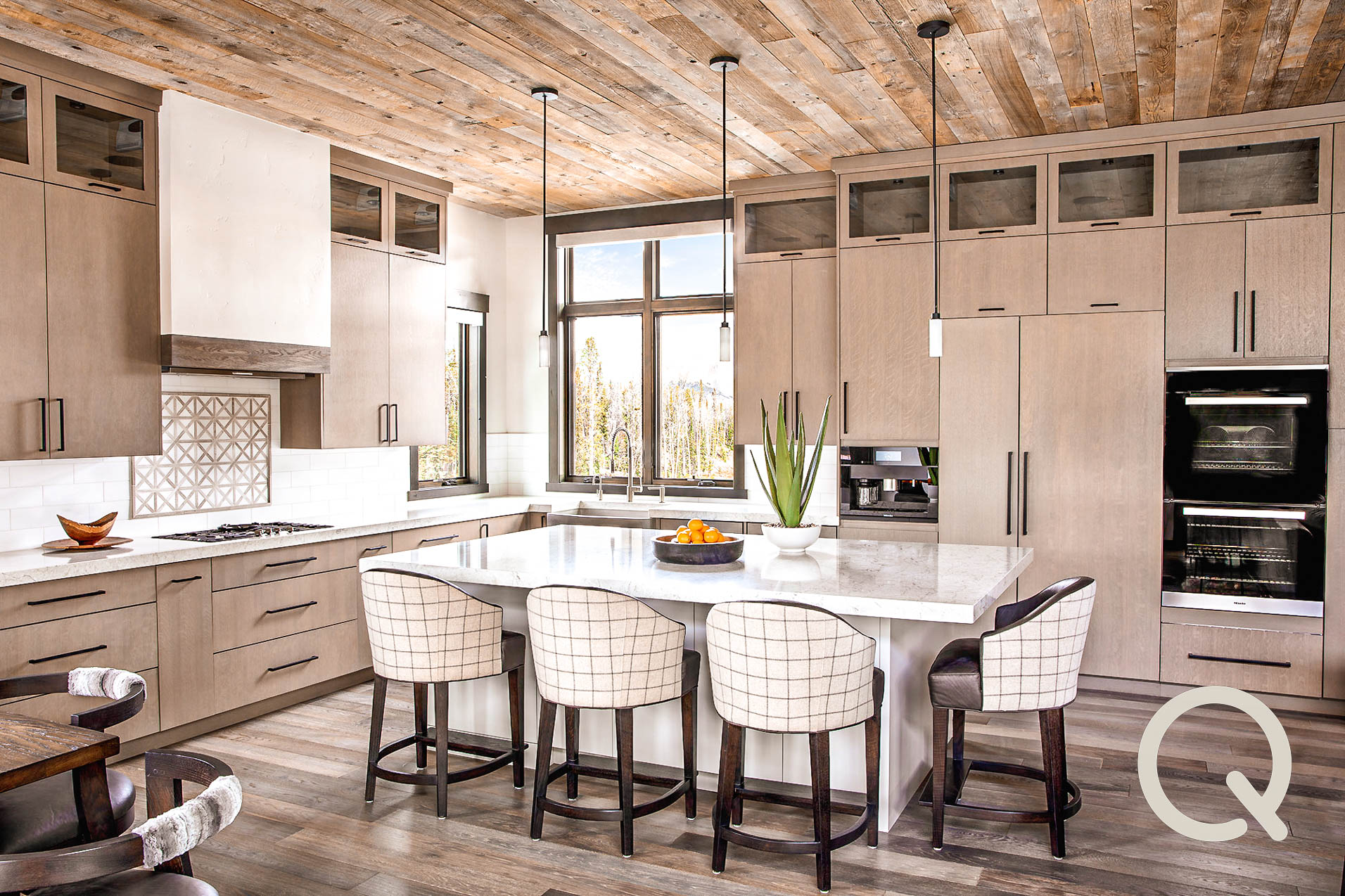
The principle works because it creates cohesion through repetition while allowing enough variety to feel collected rather than catalog-coordinated.
Warm and Cool Tone Balance
Metal finishes carry undertones just like wood stains and paint colors. Brass, bronze, and copper read warm. Chrome, stainless, and polished nickel read cool. Oil-rubbed bronze and matte black can go either way depending on what they're paired with.
Successful mixed-metal kitchens typically balance warm and cool rather than clustering all finishes on one side of the spectrum. A space dominated by warm brass and copper can feel heavy without a cool-toned counterpoint. All-cool stainless and chrome can read sterile without warmer elements to add depth.
In Montana kitchens, this balance often responds to the materials already present. A kitchen with reclaimed wood beams and natural stone counters can handle warmer metal finishes. The brass and bronze feel at home against organic textures. Spaces with cooler-toned quartz or concrete benefit from mixing in brass or aged copper to prevent the room from feeling too stark.
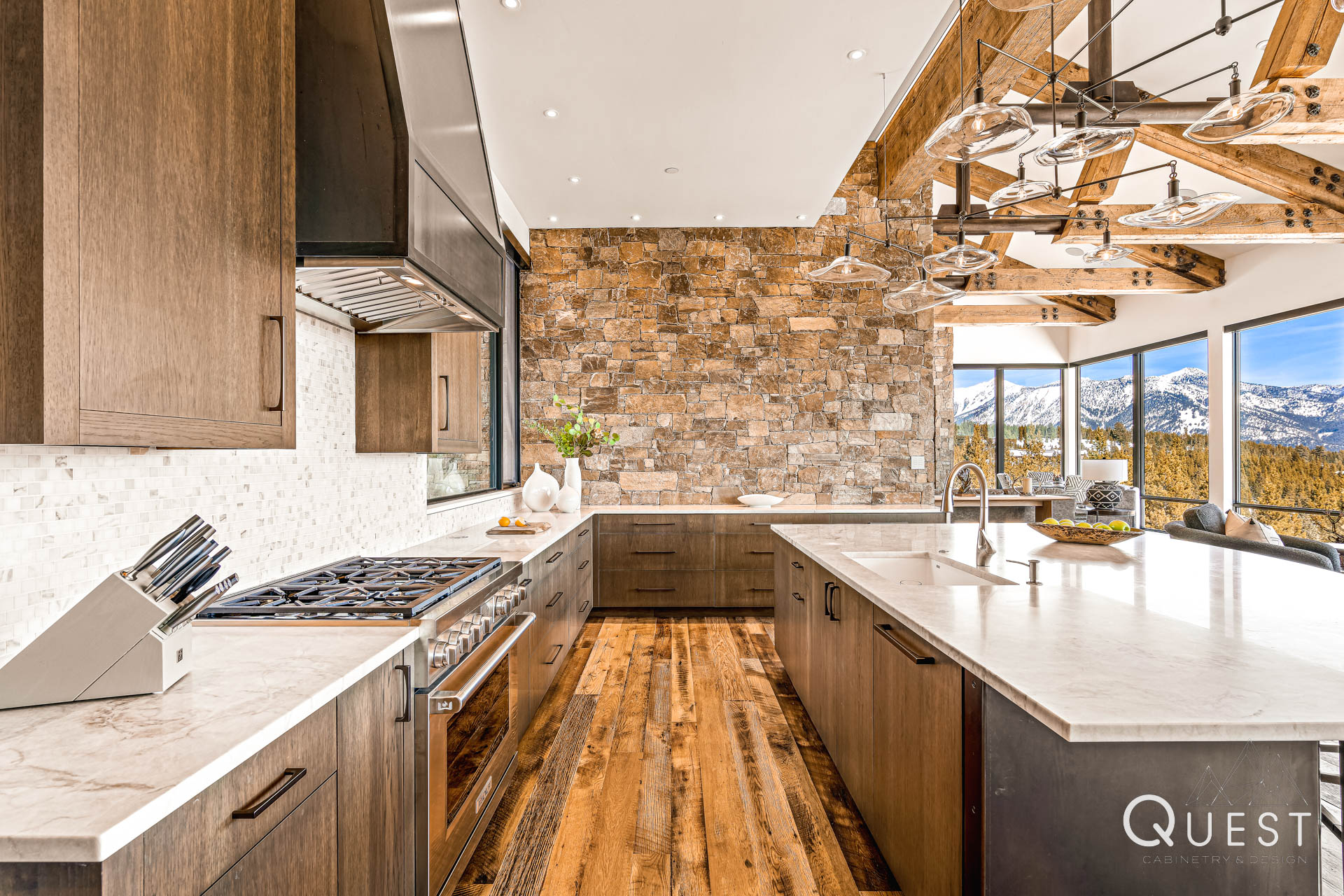
Mountain light plays a role too. The quality of natural light in Gallatin Valley (particularly in homes with southern exposures and large windows framing dramatic views) can intensify how metal finishes read throughout the day. Warmer metals tend to glow in afternoon light, while cooler finishes stay more neutral. Quest factors this into finish recommendations, especially for hardware that will be visible under changing conditions from dawn through evening.
Beyond Hardware: Architectural Metal Elements
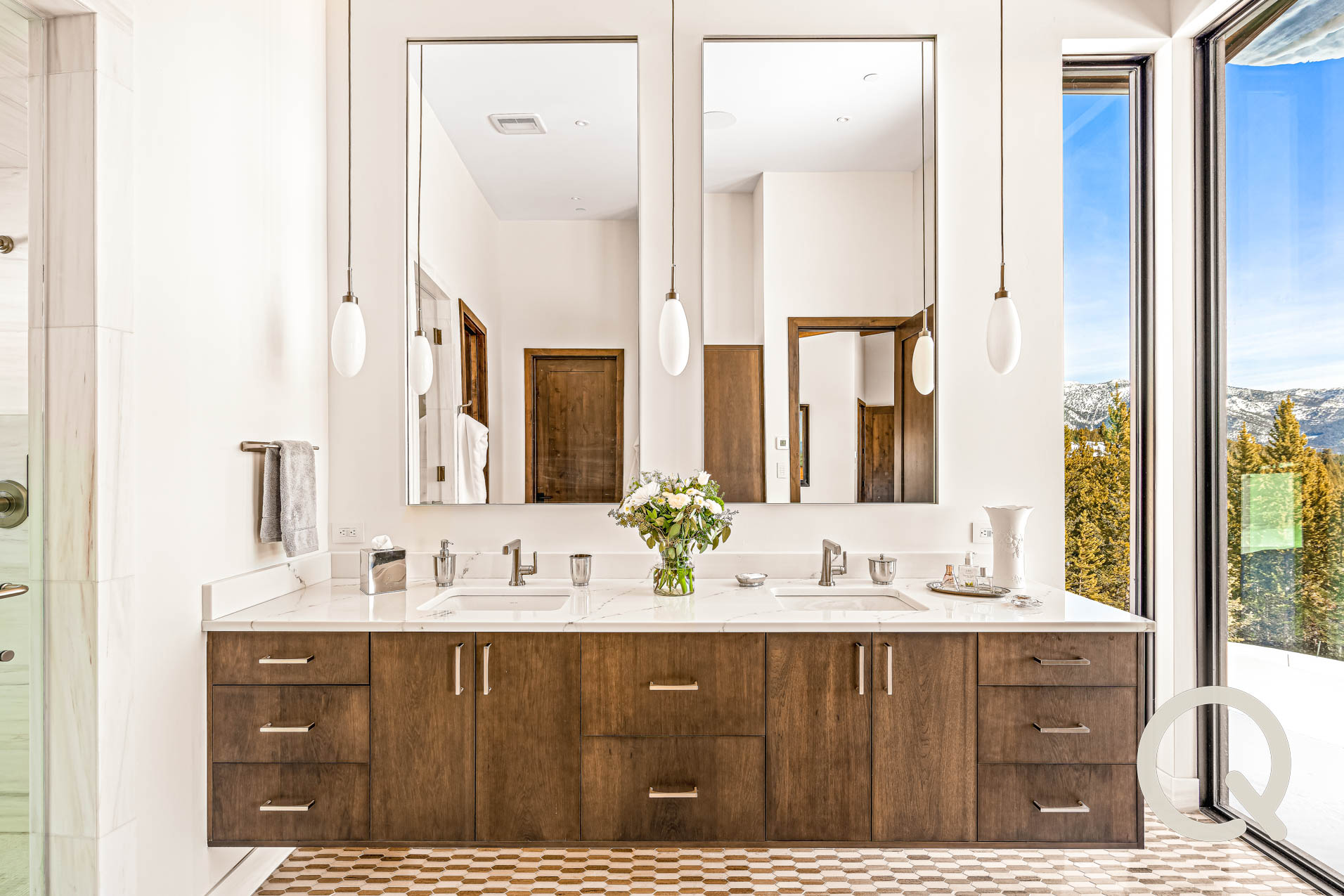
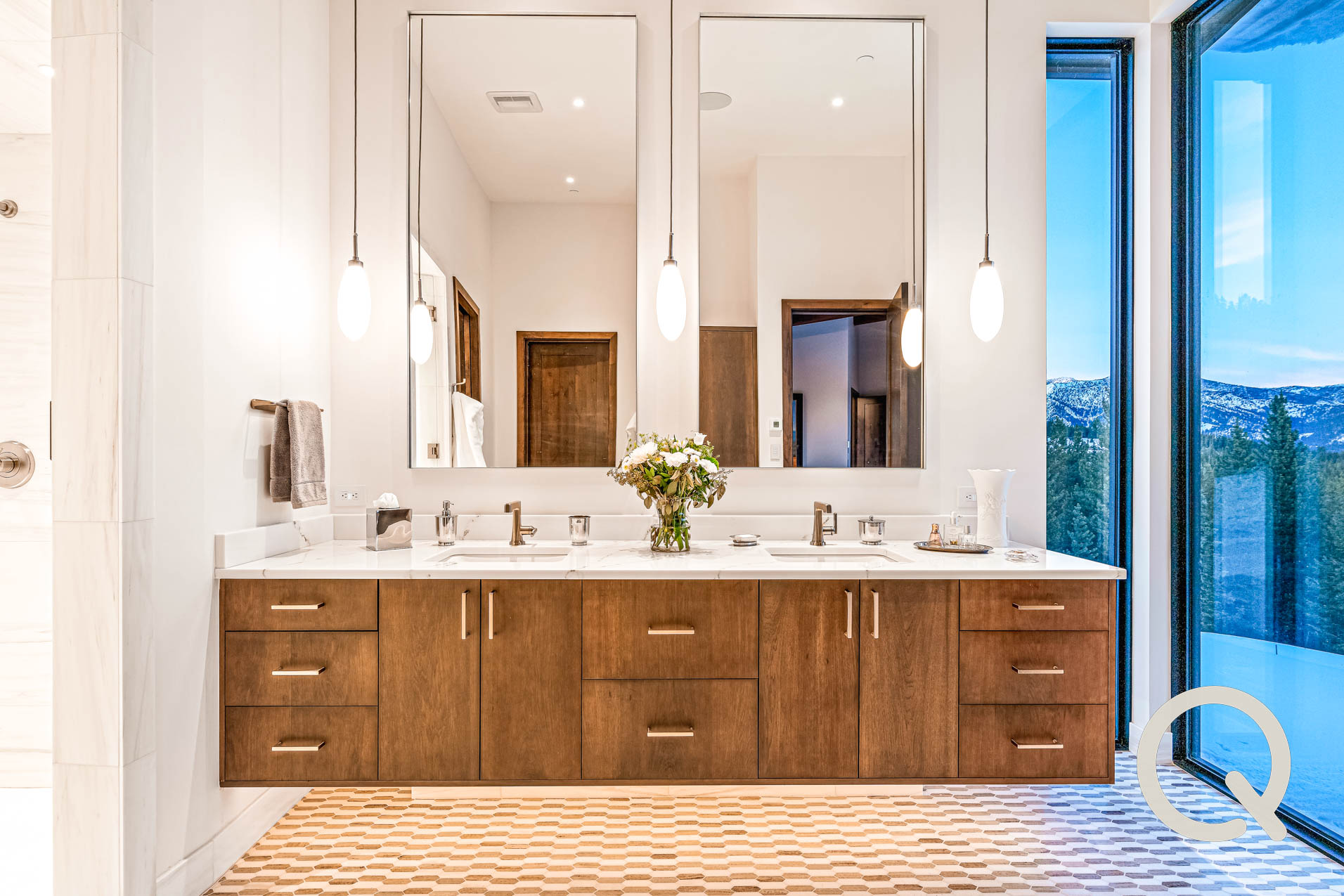
Mixed metals extend well beyond faucets and cabinet pulls. Contemporary custom kitchens incorporate metal in structural and decorative ways that add another layer to the coordination strategy.
Open shelving with black steel or brass frames provides both function and visual punctuation, creating opportunities to echo finishes used elsewhere. Metal-faced cabinets (whether full stainless fronts or aluminum-framed glass doors) introduce industrial elements that can soften a space when paired with warmer finishes in lighting or hardware.

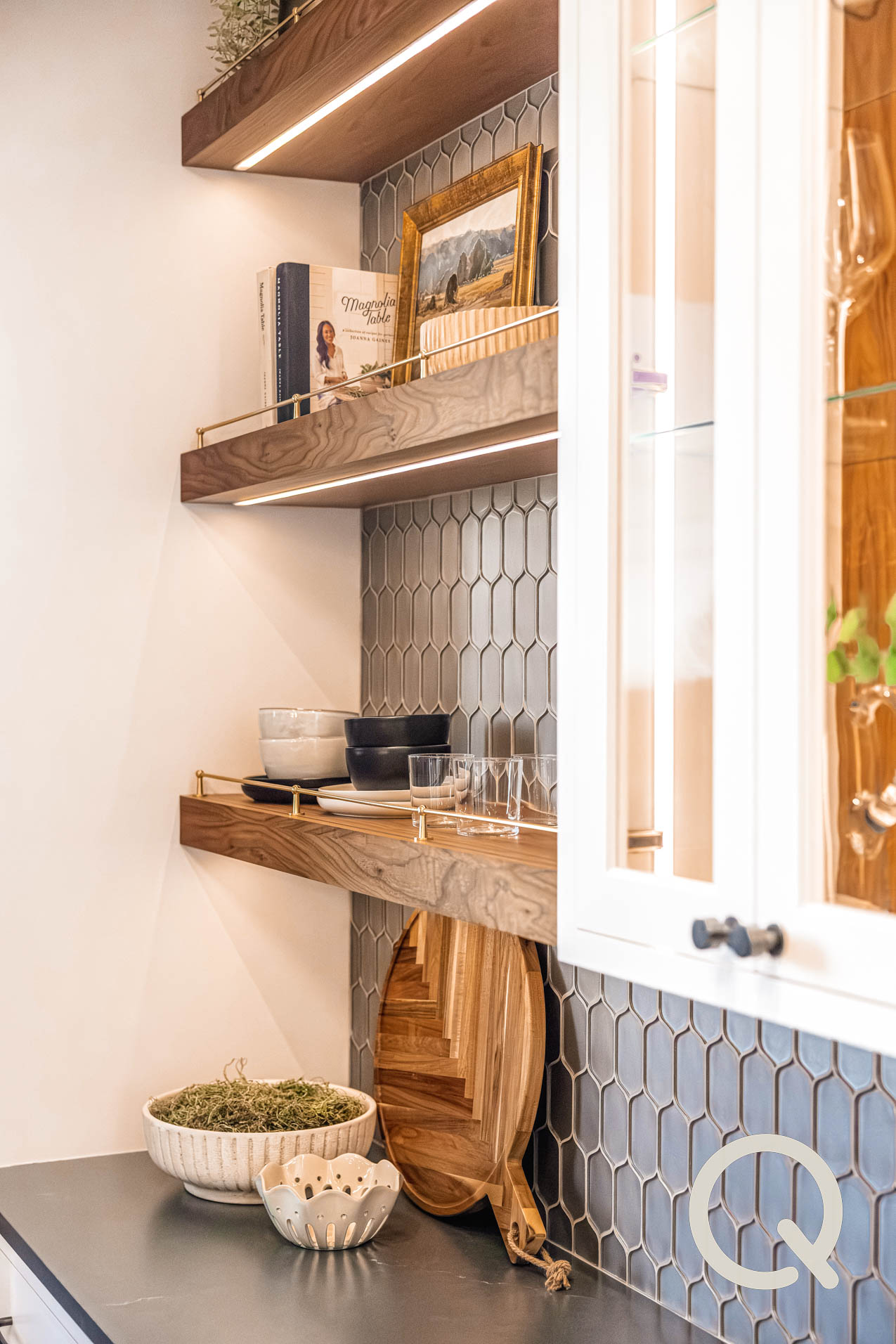
Integrated rails for utensils or spices, metal trim details on islands, decorative shelf brackets, even the finish on bar stools: these supporting elements reinforce the metal palette without requiring exact matches. A kitchen with brushed brass cabinet hardware can incorporate slim black rails on open shelving, then echo that black in the pendant lights overhead. The repetition creates cohesion even as the specific applications vary.
The effect is layered and collected rather than rigidly coordinated.
Montana's Rustic-Modern Aesthetic
Mixing metals fits naturally within the design language common to luxury homes in Bozeman, Big Sky, and throughout Gallatin Valley. The regional aesthetic tends toward materials with presence: substantial wood, stone, steel, leather. Metal mixing complements this rather than competing with it.
Where national trends sometimes lean heavily industrial or ultra-modern, Quest's approach considers how metal finishes interact with Montana's preference for warmth and authentic texture. A kitchen might pair the clean lines of matte black fixtures with the organic quality of hand-forged iron hardware. Or combine sleek stainless appliances with antique brass details that nod to the region's mining and ranching heritage.

This isn't about rigidly following formulas as much as understanding context. The same mixed-metal approach that works beautifully in a contemporary loft might feel too stark in a timber-frame home with exposed log construction. Quest's familiarity with local architectural styles (and the builders and designers creating them) means metal recommendations align with the broader design vision rather than fighting against it.
Collaboration with trade partners matters here. When Quest works alongside builders and interior designers on Gallatin Valley projects, metal coordination happens as part of the larger material conversation. Cabinet finishes, lighting selections, and architectural details get considered together, creating spaces where mixed metals feel intentional from the start.
Practical Considerations
While mixed metals create visual interest, finishes still need to function within the daily reality of kitchen use. Durability and maintenance requirements matter as much as appearance.
Unlacquered brass develops a living patina over time. Some homeowners love this evolving quality, others prefer the consistency of sealed or PVD-coated options that resist tarnishing. Matte black shows water spots but hides fingerprints. Polished finishes require more frequent cleaning but maintain their brightness longer. Oil-rubbed bronze can wear through to brighter bronze underneath in high-contact areas.
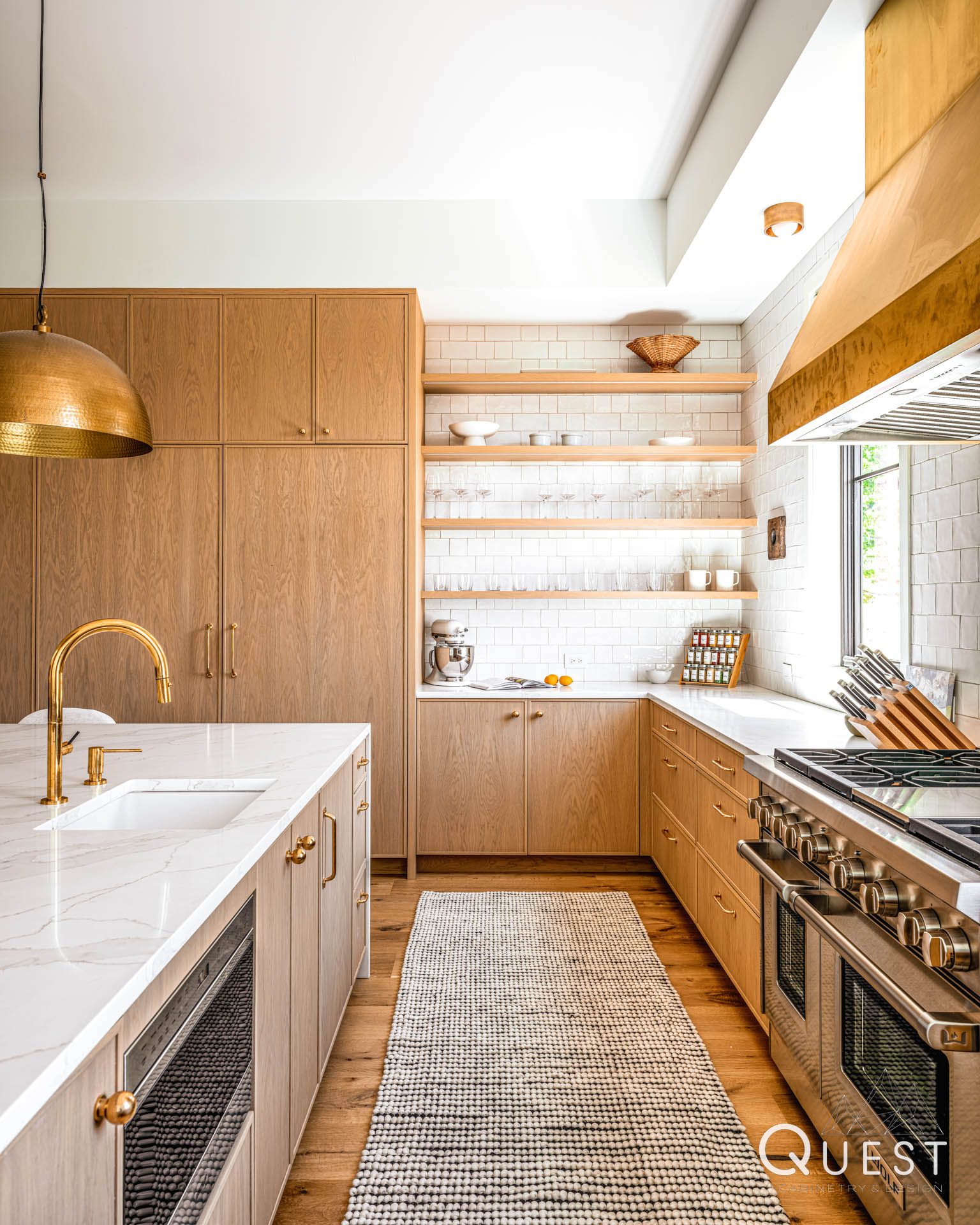
Quest walks clients through these trade-offs during the design process. The goal is finding finishes that match both aesthetic preferences and lifestyle expectations, a balance that matters as much as the visual composition.
Creating Intentional Cohesion
The difference between intentional and accidental metal mixing comes down to repetition and restraint. Each finish should appear multiple times throughout the space, and there should be a clear reason for its inclusion beyond individual preference for isolated elements.
This doesn't mean mathematical precision or perfect symmetry. It means considering how cabinet hardware relates to lighting, how faucets coordinate with appliances, and how decorative elements reinforce rather than contradict the established palette.
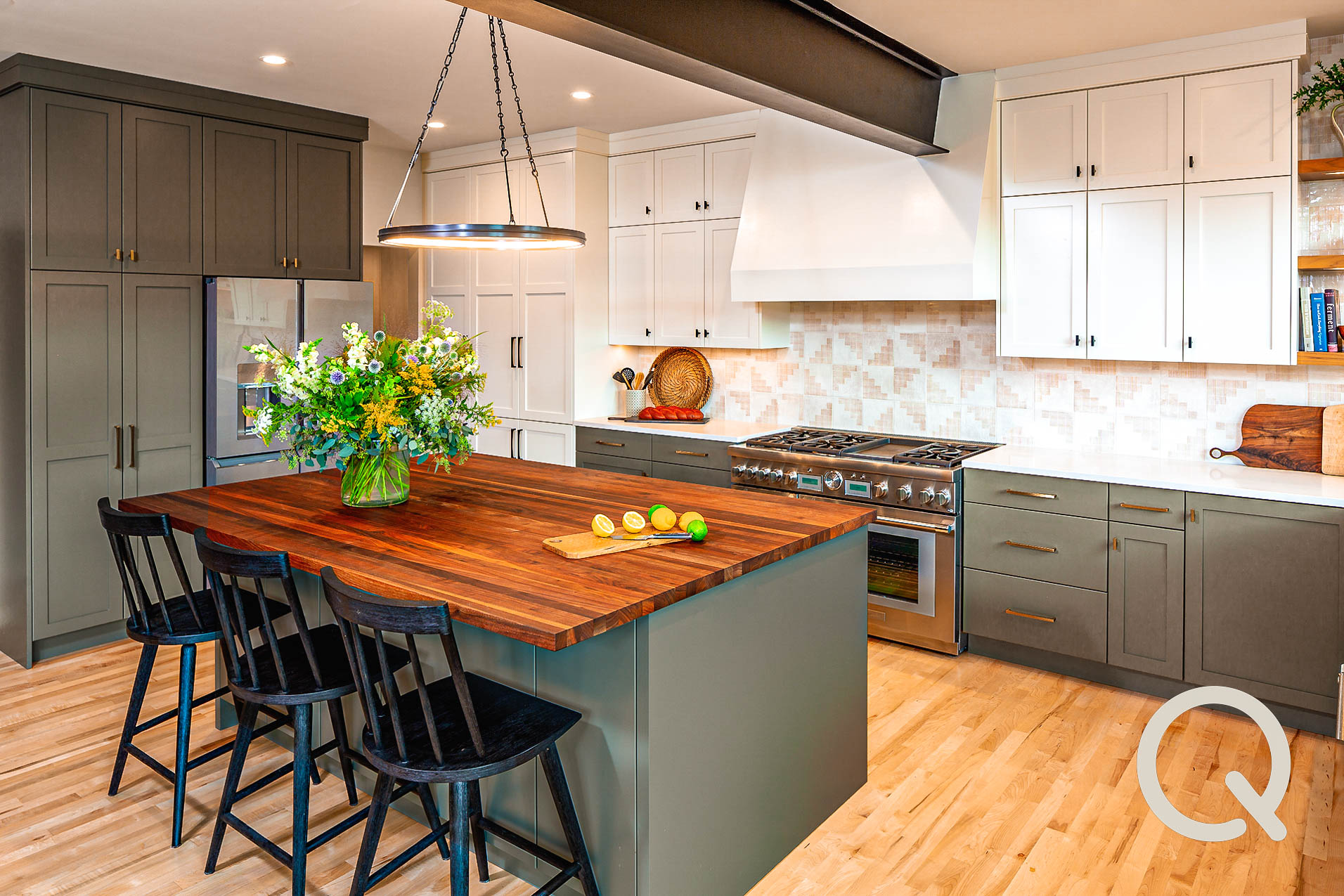
Quest's process builds this coordination into the cabinet design phase. When hardware, lighting, and architectural details are considered together from the beginning (rather than selected piece by piece as the project progresses), the final result feels cohesive even with three or four different metal finishes in play.
Moving Forward
Mixing metals in kitchen design reflects a broader shift toward spaces that feel curated and personal rather than showroom-perfect. For projects in Gallatin Valley and Big Sky, this means applying design trends within the context of Montana's distinct aesthetic: the balance of contemporary and rustic, refined and approachable, sophisticated and livable.
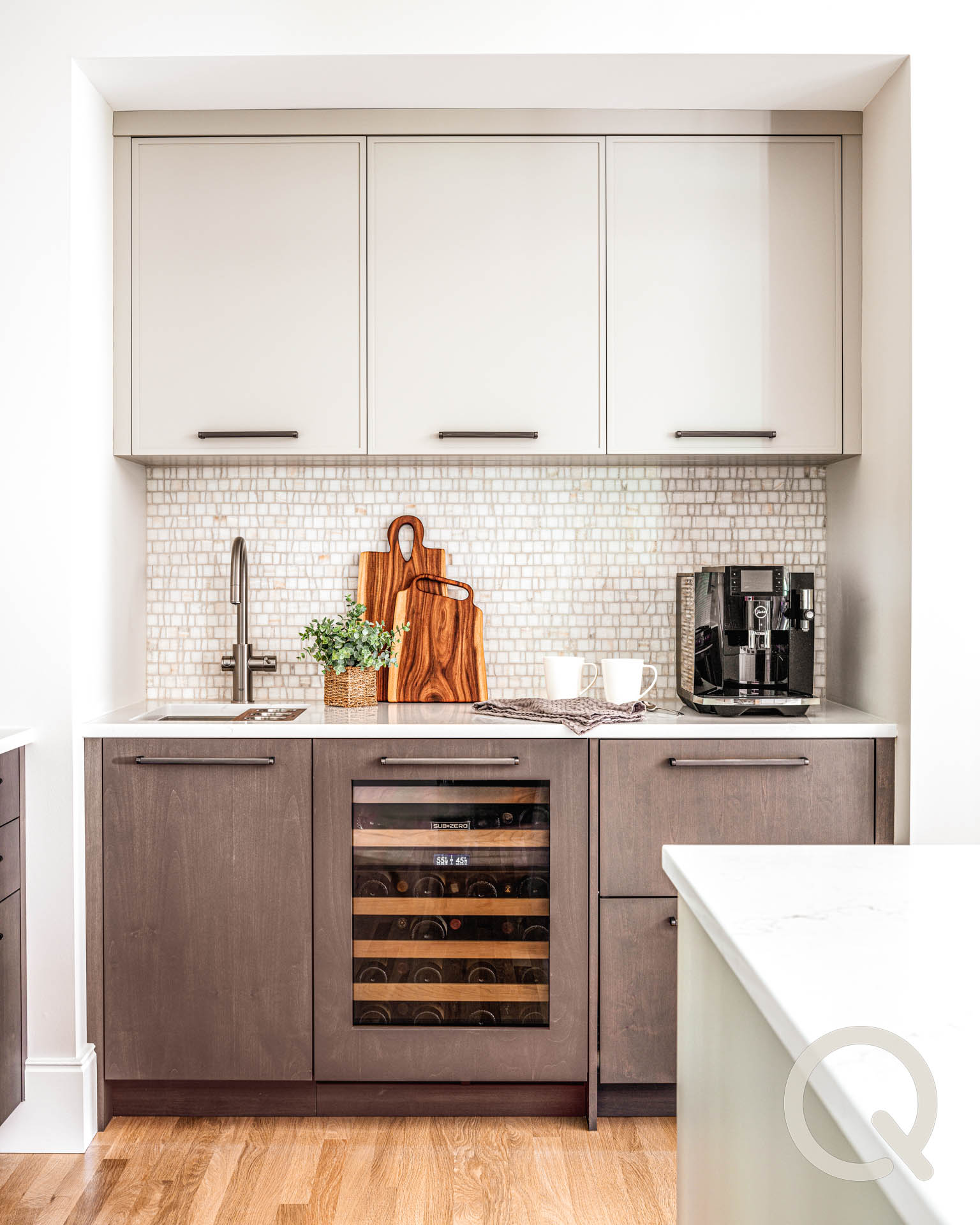
The approach works when metal finishes are treated as part of the overall material strategy, coordinated during the design process rather than selected in isolation. Quest's collaborative process with builders, designers, and homeowners means these decisions happen at the right moment: early enough to inform cabinetry design, late enough to respond to the space as it develops.
Browse Quest's portfolio to see how mixed metal finishes integrate within completed Gallatin Valley projects, or visit our Bozeman showroom to explore hardware and finish options in person.